
Healthcare Cabinetry: Design Considerations for Medical Facilities
From nurse stations to exam room cabinetry, discover the unique requirements and best practices for healthcare facility millwork and casework.
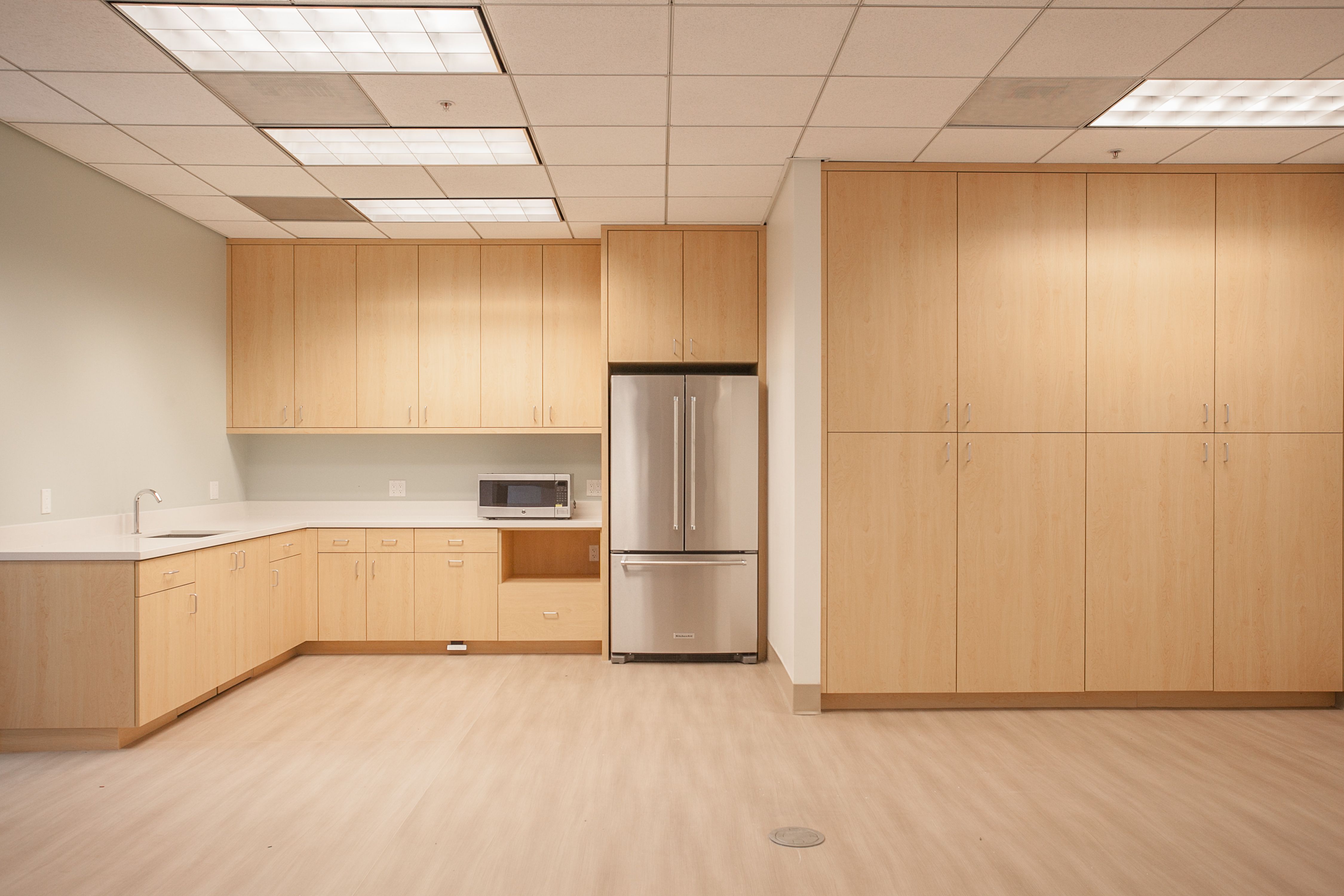
Healthcare facilities have unique cabinetry requirements that go far beyond standard commercial applications. Infection control, durability, accessibility, and workflow efficiency all play critical roles in designing and fabricating cabinetry for medical environments. After decades of healthcare projects—from nurse stations to exam rooms—here's what we've learned.
Material Selection: Sanitary & Durable
Healthcare cabinetry must withstand frequent cleaning with hospital-grade disinfectants. Materials need to be non-porous, moisture-resistant, and able to handle harsh chemicals without degrading.
Corian & Solid Surfaces: The gold standard for healthcare countertops and nurse stations. Corian is non-porous, seamless, and can be fabricated into complex shapes. It resists bacteria growth and can be disinfected without damage.
High-Pressure Laminate (HPL): Works well for vertical surfaces and cabinet doors. Choose laminates with antimicrobial properties when available. Avoid textured finishes that can trap bacteria.
Avoid: Porous materials like untreated wood, textured surfaces, and materials that can't handle repeated disinfection.
Nurse Stations: The Hub of Healthcare Facilities
Nurse stations are the operational heart of any healthcare facility. They need to balance functionality, durability, and aesthetics while supporting the workflow of medical staff.
Key Design Considerations:
- Workflow Efficiency: Design for easy access to supplies, charts, and equipment. Consider sightlines to patient rooms.
- Cable Management: Integrate channels for power, data, and phone lines. Medical facilities have extensive technology requirements.
- Durability: Nurse stations see constant use. Choose materials and hardware that can handle high traffic.
- Accessibility: Ensure countertops and work surfaces comply with ADA height requirements (typically 28-34 inches).
Exam Room Cabinetry: Function First
Exam room cabinetry needs to support clinical workflows while maintaining a clean, professional appearance. Storage for supplies, sharps disposal, hand hygiene stations, and counter space for equipment are all essential.
Best Practices:
- Include a dedicated hand hygiene sink with touchless faucets
- Integrate sharps disposal and biohazard waste containers
- Provide ample counter space for exam equipment and paperwork
- Use soft-close hinges and drawer slides to reduce noise
- Ensure all surfaces are easy to clean and disinfect
Infection Control: Design for Cleanliness
Infection control is paramount in healthcare environments. Cabinetry design should minimize surfaces where bacteria can hide and make cleaning as easy as possible.
Design Strategies:
- Minimize Seams: Use solid surface materials where possible to eliminate seams and crevices
- Smooth Surfaces: Avoid decorative molding, trim, or hardware that creates cleaning challenges
- Sealed Edges: Ensure all edges are properly sealed to prevent moisture infiltration
- Touchless Options: Consider touchless cabinet openers and drawer pulls where appropriate
ADA Compliance & Accessibility
Healthcare facilities must comply with ADA (Americans with Disabilities Act) requirements. This affects counter heights, knee clearances, reach ranges, and hardware selection.
Key Requirements:
- Counter heights between 28-34 inches for wheelchair access
- Knee clearance of at least 27 inches high, 30 inches wide, 19 inches deep
- Hardware that can be operated with one hand and doesn't require tight grasping or twisting
- Clear floor space for wheelchair maneuvering (typically 30x48 inches)
Durability & Longevity
Healthcare cabinetry is a long-term investment. Facilities need cabinetry that will last 15-20+ years under heavy use. This means choosing commercial-grade materials, hardware, and construction methods.
Invest in Quality:
- Commercial-grade drawer slides rated for 100,000+ cycles
- Soft-close hinges to reduce wear and noise
- Reinforced cabinet boxes for heavy equipment and supplies
- High-quality edge banding that won't peel or chip
Planning a Healthcare Facility Project?
We've fabricated and installed cabinetry for medical offices, infusion clinics, dental practices, and healthcare facilities across Southern California. We understand the unique requirements of healthcare environments and can help you design a solution that balances function, durability, and aesthetics.
Discuss Your Healthcare ProjectWritten by
California Woodworking, Inc.